
Estimated reading time: 12 minutes
Sustainable Habits! A 7-year-old in Seattle sparked a neighborhood recycling revolution by organizing a weekly “Trash Treasure Hunt.” Simple but powerful.
Today’s Generation Alpha (born 2010-2024) displays an unprecedented awareness of environmental issues, with 60% expressing concern about climate change before they even reach middle school.
I’ve witnessed firsthand how these digital natives approach sustainability differently than any generation before them. They don’t just want to learn about protecting the planet – they demand to be part of the solution.
But nurturing these green instincts requires a delicate balance of technology, hands-on experience, and age-appropriate empowerment. Let’s explore how we can help these young environmental champions develop habits that stick.
“Mini-millennials” or Generation Alpha will define the future with their innate digitalness. As they enter teens, they will impact commerce and retail worldwide. And, regarding sustainability, it will be foolish to ignore their purchasing power.
Digital world is the best place for them to learn about sustainability aspects.
It can mean promoting eco-friendly practices like using public transportation, reducing plastic waste, or conserving energy. With their digital prowess and the help of AI, Gen Alpha has the potential to drive sustainable change and shape a better future for our planet.
In this blog, we talk about generation alpha habits. How parents can develop sustainable habits, and what they can learn from millennial parents.

What are Sustainable habits?
Sustainable habits in Gen Alpha are behaviors and routines that contribute to the well-being of individuals and the planet in the long term. These habits are centered around reducing waste, conserving resources, and promoting eco-friendly practices.
They can include actions such as recycling, using renewable energy sources, shopping consciously, eating locally sourced foods, and opting for public transportation whenever possible.
Why are sustainable habits important for Gen Alpha?
Gen Alpha facing climate challenges is not just speculation, it’s their reality. Born into a world of rising temperatures and shifting weather patterns, these kids will navigate environmental changes that previous generations only read about in scientific reports.
But here’s what makes this generation different: they’re uniquely positioned to drive change. Growing up with unprecedented access to information and global connections, Gen Alpha kids understand sustainability isn’t just about recycling a water bottle. It’s about systems thinking. These kids grasp connections that took previous generations years to recognize.
Let’s break down why sustainable habits matter specifically for Gen Alpha Kids:
- Digital DNA meets environmental awareness: Gen Alpha intuitively uses technology to track and improve their environmental impact. From apps that monitor household energy use to games teaching circular economy principles, they’re combining tech-savvy skills with ecological consciousness.
- Long-term behavioral impact: Habits formed before age 12 often stick for life. When we teach sustainable practices early, we’re not just influencing childhood behaviors – we’re shaping lifelong patterns.
- Multiplier effect: Gen Alpha kids influence their families’ purchasing decisions and habits more than any previous generation. When they learn about sustainability, the impact ripples through entire households.
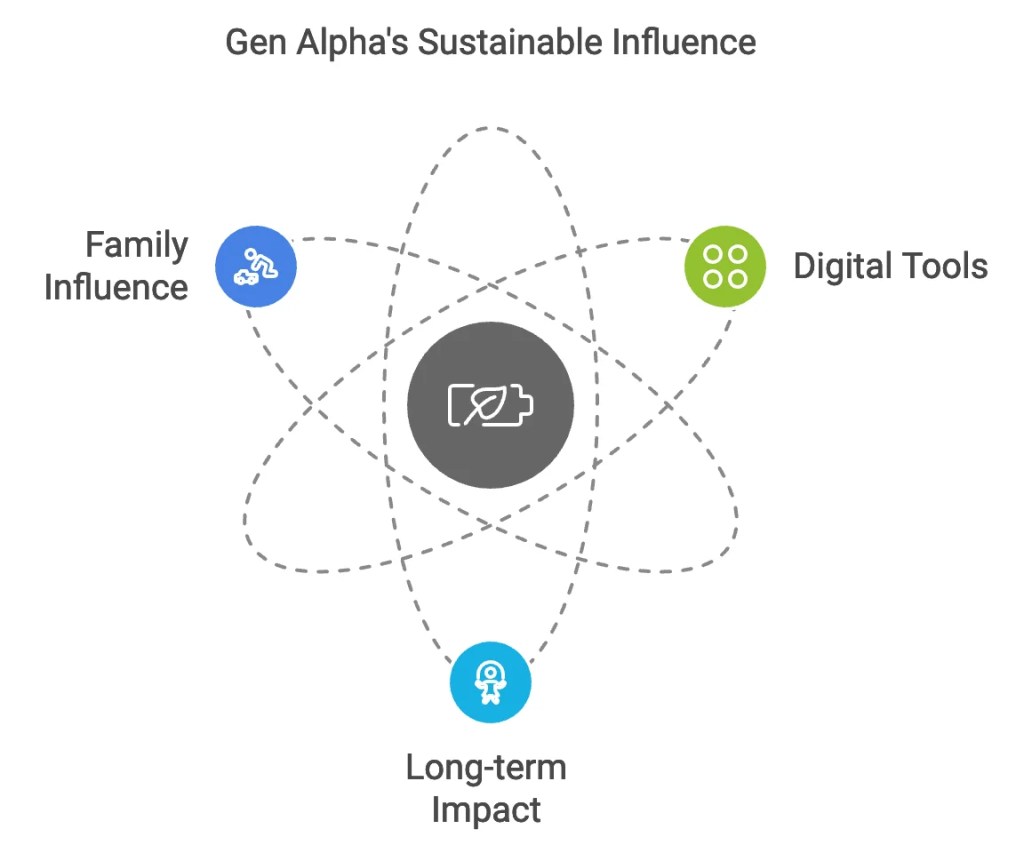
The stakes are personal for them. Unlike previous generations who viewed environmental issues as distant concerns, Gen Alpha sees climate change affecting their daily lives and future plans. They’re experiencing shifting seasons, extreme weather events, and environmental discussions at the dinner table.
Most importantly, they’re showing us something remarkable: optimism in action. Despite inheriting significant environmental challenges, Gen Alpha approaches sustainability with creativity and hope. They don’t just adopt green habits because they’re told to – they innovate and improve upon them.
This isn’t about burdening kids with global problems. It’s about equipping them with practical tools to thrive in a changing world. When we nurture sustainable habits in Gen Alpha, we’re not just helping the environment – we’re empowering a generation to build the future they want to live in.
So, How do you develop and nurture sustainable habits in Gen Alpha kids?
- Encourage independent learning: Unlike Millennials and Boomers, Gen Alpha kids can think independently and learn on their own at an early age. It is because of their exposure to the world and easy access to various concepts. They are also proficient in technology and social media, so it is important to encourage them to learn in a healthy environment.
- Emphasize minimalism and quality: Gen Alpha kids are more likely to be interested in environmental issues and sustainability. These young consumers are drawn to products of high quality and beautiful designs. It is vital to instill this perspective early on, as this viewpoint may become a lifelong habit.
- Foster awareness of social issues: Gen Alpha kids care about social issues such as homelessness and refugees. By discussing social issues, children will be more aware of the world around them and can develop positive habits from an early age. It will also enable them to come up with solutions that will benefit people across the globe.

List of sustainable habits for Gen Alpha Kids
Time needed: 5 minutes
Building sustainable habits for Generation Alpha can make a crucial impact on sustainability by adopting eco-friendly habits. A few key practices include:
- Digital Natives Go Green (Ages 4-7)
– Create digital plant diaries with tablet photos to track growth
– Use kid-friendly apps to time showers (make it a game!)
– Learn to spot recycling symbols on packaging
– Switch off devices with a “Power Patrol” badge
– Sort waste into colored bins using picture guides
- Earth Champions (Ages 8-11)
– Start a home composting project using smart sensors
– Track household energy use with simple monitoring apps
– Pack zero-waste lunches in reusable containers
– Create digital “waste logs” to monitor family recycling
– Design upcycling projects using online tutorials
– Calculate their “water footprint” through interactive tools - Teen Eco-Warriors (Ages 12+)
– Research brands’ sustainability practices before purchases
– Organize neighborhood cleanup events using social media
– Use smart thermostats to optimize home energy use
– Start vertical gardens with hydroponic systems
– Create content about their sustainable journey
– Join online environmental communities - Family Habits
– Plan meatless Mondays using recipe apps
– Shop local using farmers’ market finder tools
– Calculate carbon footprint together monthly
– Create digital shopping lists to prevent over-buying
– Use smart home features to reduce energy waste
– Host virtual clothing swaps with friends - School & Community
– Initiate e-waste collection drives
– Create digital environmental newsletters
– Start school gardens with QR-coded plant information
– Organize virtual sustainability workshops
– Track school recycling progress with apps
– Lead paperless classroom initiatives


Remember: The key is making these habits feel natural, not forced. Gen Alpha responds best to sustainable practices that:
– Include a tech component
– Offer measurable results
– Create social connections
– Provide immediate feedback
– Feel empowering rather than restrictive
Download this free ebook – Alpha Advantage.
Start with one or two habits and build gradually. The goal isn’t perfection – it’s progress and lasting change.
How do you measure the success of your child’s Sustainable Habits?
Here’s how to effectively measure your child’s sustainable habits, using both quantitative and qualitative metrics:
1. Digital Tracking Tools
- Create weekly “green scores” using habit-tracking apps
- Monitor household energy consumption changes
- Track waste reduction through simple spreadsheets
- Use smart home data to measure resource usage
- Document recycling weights or volumes
2. Behavioral Indicators
- Observe unprompted sustainable choices
- Notice when they spot waste or inefficiency
- Listen for sustainability discussions with friends
- Watch how they influence family decisions
- Monitor their problem-solving approaches
3. Measurable Outcomes
- Compare monthly utility bills
- Weigh household waste before and after new habits
- Calculate water usage reductions
- Track the number of single-use items eliminated
- Measure food waste reduction
4. Quality Over Numbers
- Notice increased environmental awareness
- Observe growing curiosity about sustainability
- Watch for independent research on environmental topics
- Look for creative solutions to reduce waste
- Monitor their emotional connection to nature
5. Social Impact Markers
- Count how often they share eco-tips with others
- Track their involvement in environmental projects
- Notice when they inspire peers or family members
- Monitor their participation in community initiatives
- Document their sustainable leadership moments
Measuring success isn’t about perfection. Look for:
- Consistent small improvements
- Growing awareness
- Independent initiative
- Positive attitudes toward sustainability
- Long-term habit formation
The goal is progress, not pressure. Celebrate small wins and use setbacks as learning opportunities.
Tip: Create a simple monthly “Green Growth Report” with your child, combining numbers (like reduced waste) with observations about their developing environmental awareness. This makes progress visible while keeping the focus on learning rather than performance.
What is the role of parents during the nurturing phase?
Millennial parents are most likely to be the primary influencers for Gen Alpha’s formative years, as they are the most educated and well-traveled generation in history.
Lead By Example (Without Preaching)
- Model conscious consumption quietly but consistently
- Share your own sustainability learning journey
- Admit when you make environmental mistakes
- Show enthusiasm for sustainable alternatives
- Make green choices visible but not virtuous
Create Supporting Systems
- Set up easy-to-use recycling stations
- Stock sustainable alternatives to single-use items
- Arrange spaces that encourage eco-friendly choices
- Install water-saving devices together
- Make sustainable options the default choice
Empower, Don’t Enforce
- Give children agency in environmental decisions
- Let them choose sustainability projects
- Support their eco-initiatives, even if imperfect
- Allow space for trial and error
- Encourage their unique approaches to sustainability
Educational Support
- Answer questions honestly about climate change
- Provide age-appropriate environmental resources
- Connect them with eco-minded peers
- Share relevant news in digestible ways
- Help research their environmental interests
Emotional Navigation
- Validate environmental concerns without amplifying anxiety
- Focus on solutions rather than problems
- Celebrate small wins enthusiastically
- Handle eco-anxiety with care and optimism
- Keep the tone positive and empowering
Remember: Your Role Is To:
- Guide, not govern
- Support, not supervise
- Encourage, not enforce
- Listen, not lecture
- Facilitate, not force
The most effective approach? Be the steady support system while letting your child take the lead. Their generation has inherent environmental awareness – our job is to nurture it, not direct it.
Key Principle: Focus on progress over perfection. Your consistent support matters more than occasional perfect execution of sustainable practices.
What can Gen Alpha learn from Gen Z and Millennials about Sustainable Habits?
Lessons from Gen Z
- Digital Activism Done Right Born into social media, Gen Z mastered online environmental advocacy. They showed us how hashtags become movements and tweets transform into real action. But they also learned the hard way about digital burnout and performative environmentalism.
Key Takeaways:
- Balance online and offline activism
- Focus on impact over social media metrics
- Build genuine community connections
- Avoid “clicktivism” without action
- Use digital platforms strategically, not compulsively
Millennial Insights
These early sustainability pioneers navigated the shift from awareness to action. Their journey from “green washing” skeptics to conscious consumers offers valuable lessons.
What Worked:
- Corporate accountability demands
- Sustainable brand building
- Circular economy initiatives
- Farm-to-table movements
- Minimalism trends
What Needed Improvement:
- Breaking free from consumer guilt
- Avoiding perfectionism paralysis
- Managing eco-anxiety
- Balancing convenience with consciousness
- Making sustainability accessible
Frequently Asked Questions about Sustainable Habits
Sustainable behaviors include using reusable water bottles, turning off unused lights, composting food scraps, walking or biking for short trips, and choosing second-hand items. Think small actions with big impact. Start with one habit and build from there.
The most effective sustainability habits are ones that fit naturally into your daily routine. Popular choices include:
– Meal planning to reduce food waste
– Using public transport when possible
– Taking shorter showers
– Repairing items instead of replacing them
– Digital-first communication to save paper
Sustainable habits are regular actions that reduce environmental impact while meeting current needs without compromising future resources. They’re conscious choices that become automatic behaviors over time, like automatically reaching for a reusable bag or instinctively sorting recyclables.
Here are five concrete examples:
– Energy conservation: Using LED bulbs and natural light
– Waste reduction: Composting and recycling
– Water conservation: Installing low-flow faucets
– Sustainable transport: Carpooling or using public transit
– Conscious consumption: Buying local, seasonal produce
The path to sustainability follows these key steps:
– Awareness: Understanding your environmental impact
– Assessment: Measuring current habits and identifying areas for change
– Action: Implementing specific sustainable practices
– Adjustment: Refining habits based on what works
– Advocacy: Sharing successful practices with others
Conclusion
The path to raising environmentally conscious kids isn’t always straight or simple. Some days they’ll forget to sort recyclables, while other days they’ll astound you by starting a composting project at school.
What matters is planting the seeds of sustainability in ways that resonate with their tech-savvy, socially conscious worldview.
Start small. Celebrate progress.
The Gen Alpha children in our lives aren’t just inheriting environmental challenges – they’re inheriting the power to solve them.
By nurturing their natural connection to sustainability today, we’re helping shape the environmental leaders of tomorrow. And that’s something worth investing in.
Hoomale is a hub of thought-provoking blogs on various subjects, from company operations to the mindset and behavior of young people to future work and tech. Stay informed and educated with our captivating reads.
Get notified of our next post via email by signing up with the form below! Follow us on YouTube.
Get your free subscription to Hoomale Newsletter now.
Disclaimer: Our post may contain affiliate links. By clicking and purchasing, the commission could come our way at no extra cost. Rest assured – we only endorse products and services with a personal stamp of approval and top-notch quality. Appreciation for your support runs deep.


