
Estimated reading time: 0 minutes
A large study on teens and tech found something striking about always-on gadgets. The more time adolescents spend glued to digital devices, the more they show avoidant or anxious patterns in relationships. Screens are shaping how young people connect, soothe themselves, and understand silence.
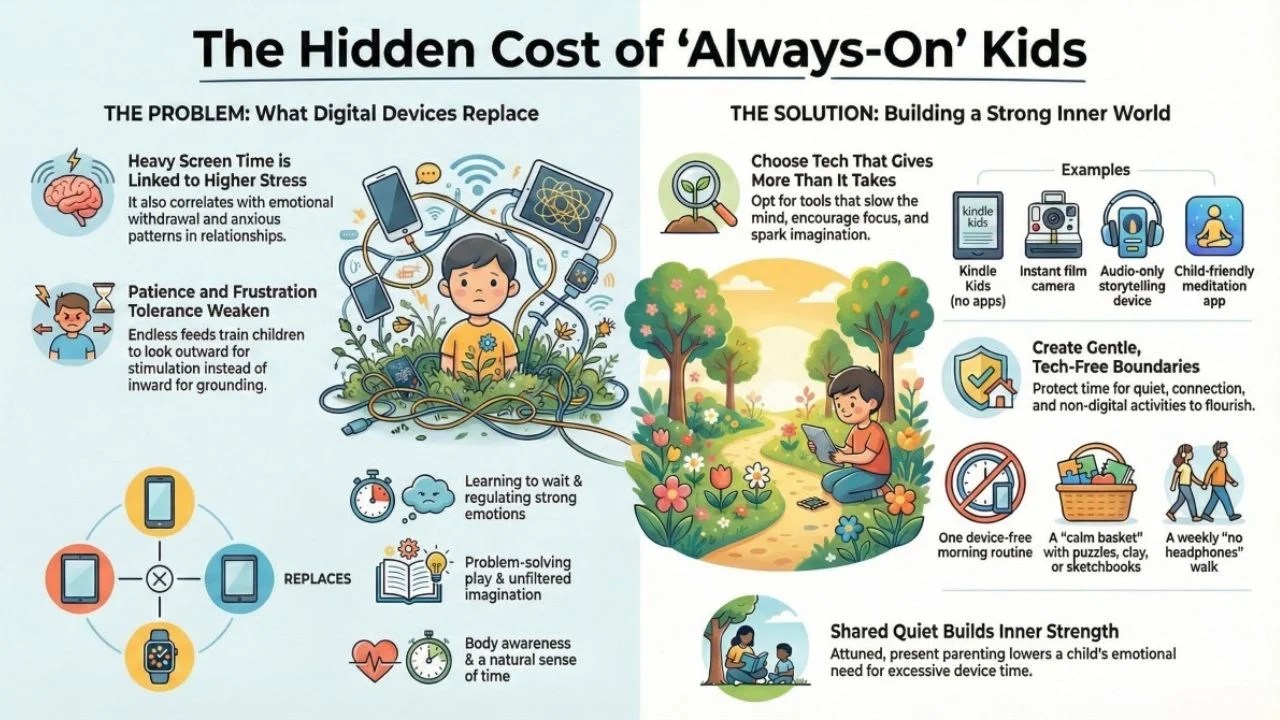
Table of contents
Why “always-on” gadgets come with hidden costs
Always-on tech rewires daily rhythms. The moment a device becomes the default companion, your child’s emotional patterns start bending around it.
Research on adolescents shows:
- Heavy smartphone use often pairs with higher stress and emotional withdrawal.
- Teens who feel insecure or overlooked at home rely even more on technology for comfort.
- In constant-stimulation environments, attention scatters faster, and self-soothing becomes harder.
I see this with many families around me. Kids don’t reach for conversation when they feel restless. They reach for chargeable relief.
Always-on tools keep the mind “switched up.” Notifications, bright icons, and endless feeds train children to look outward for stimulation instead of inward for grounding. Over time, this lowers frustration tolerance and chips at patience.
When home feels too busy, too noisy, or too distracted, children naturally fill the emotional gaps with digital companionship. That’s where the hidden cost sits.
How screen time replaces quiet: what are children losing?
The study points to a subtle cycle. It shows when parents are overwhelmed or distracted, children turn to devices more intensely. Their emotional regulation begins shifting away from slow, reflective habits toward quick hits of stimulation.
So what disappears?
- Boredom
- Inner dialogue
- Slow imagination
- Reflective thinking
- The ability to sit with discomfort
Ask yourself this: When your child reaches for a device, what moment are they trying to escape?
I remember waiting at bus stops as a teenager. Those stretches of nothingness taught me how to think, observe, daydream, and decode my own thoughts. Many Gen Alpha kids never get those raw, unstructured pockets.
Quiet is where the mind stretches.
What does this device replace in your mind?
The most powerful question in this guide comes straight from the psychological patterns the research highlights:
What internal capacity does this device replace?
A smartphone can replace:
- Learning to wait
- Handling boredom
- Regulating strong emotions
A tablet can replace:
- Problem-solving play
- Mind-wandering
- Unfiltered imagination
A smartwatch can replace:
- Body awareness
- Time sense
- The natural rhythm of pauses
Children who struggle with emotional connection often rely more on screens for relief. The study notes that avoidant teens use devices to escape discomfort, while anxious teens use them to avoid separation distress. Both patterns reduce inner space.
When you ask, “What does this replace?” you see the trade-off clearly instead of guessing.
Smart choices: tech that helps rather than hinders inner growth
You don’t need to remove tech. You need tech that gives more than it takes.
Thoughtful picks:
Pair these with gentle boundaries:
- One device-free morning routine.
- A “calm basket” filled with puzzles, clay, cards, sketchbooks.
- A weekly “no headphones” walk.
- Parent–child check-ins without any gadgets around.
The study highlights how attuned, present parenting lowers the emotional need for excessive device time. When you create shared quiet, you give your child a place to rest inside themselves.
Related articles
Frequently Asked Questions
They crowd out silence, slow thinking, and emotional rest. Kids lose boredom tolerance and rely on stimulation for comfort.
Set small pauses in the day, model device-free moments, and offer alternatives like books, puzzles, or outdoor time.
Imagination, reflection, and patience. These skills grow only when the mind has space to wander.
Yes. Kindles, instant film cameras, audio story players, and simple meditation apps encourage focus and calm.
Ask: “What would they be doing without this device?” If the answer involves creativity or quiet, the device may be filling emotional space rather than helping.
Final Takeaway
Always-on” culture fills the inner spaces children need for imagination, patience, and emotional depth. Choose tech with intention and protect silence like something precious, you help Gen Alpha grow with a stronger inner world.
Hoomale offers blogs on business, youth mindset, future work, and tech. Stay informed and educated with our captivating reads.
Get notified of our next post via email by signing up with the form below! Follow us on YouTube.
Get your free subscription to Hoomale Newsletter now.
Our fav tools: Coolors, InVideo, Semrush, WordPress, Dreamstime, Epidemic Sound
Disclaimer: Some posts have affiliate links. If you buy through them, we earn a commission at no extra cost to you. We only recommend trusted, high-quality products. Thanks for your support!


